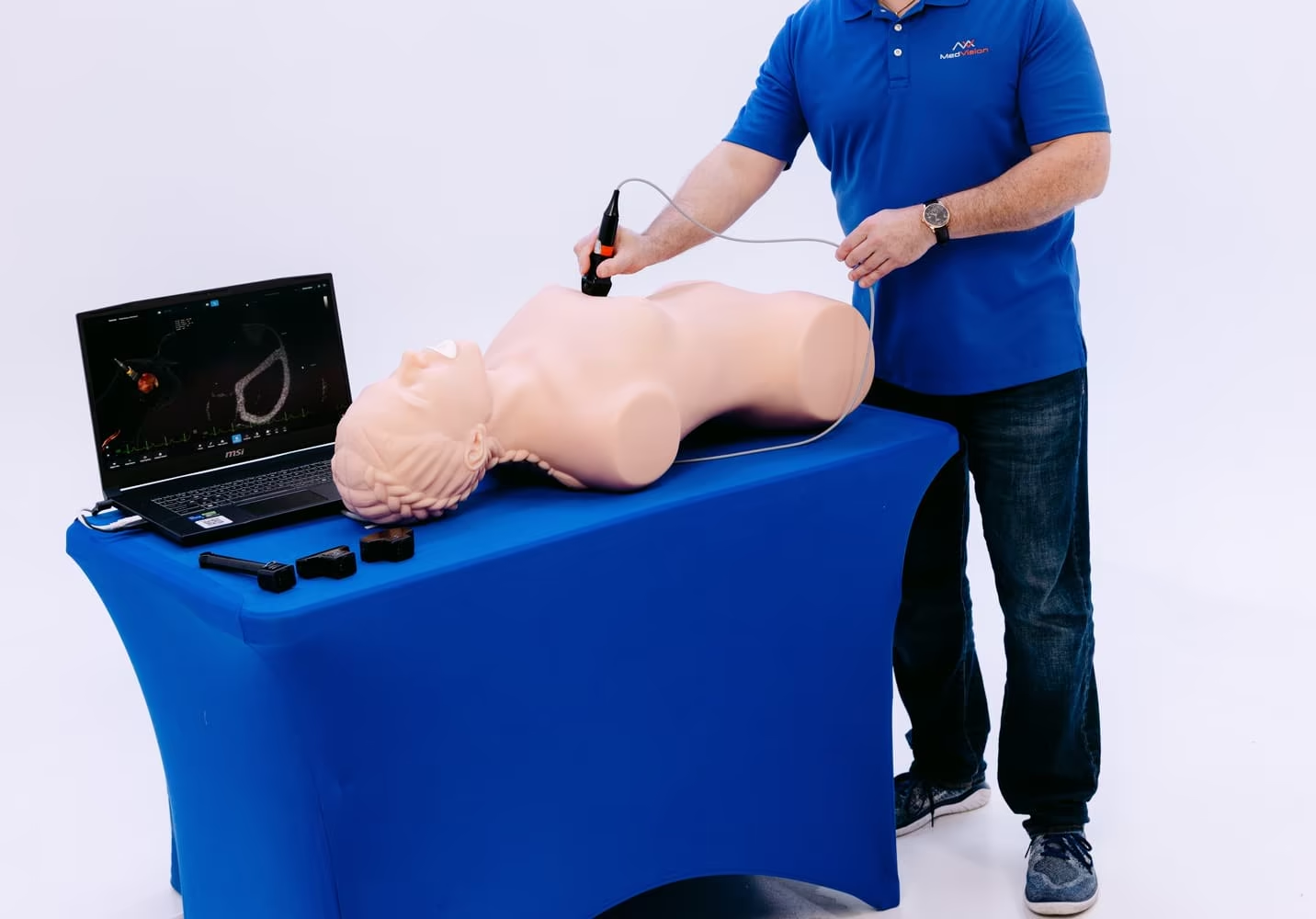
What is the fundamental difference in this healthcare approach? This core comparing process evaluates two distinct educational methodologies utilized to prepare modern healthcare professionals. The first simulation methodology relies entirely on physical robotic models designed for tactile feedback, while the second simulation leverages immersive digital vr environments. Both simulation systems aim to train clinical healthcare staff safely, ensuring competence without risking human lives.
Understanding the continuous evolution of simulation requires examining how modern healthcare training adapts to emerging vr technology. Historically, standard physical simulation models completely dominated clinical healthcare preparation across all academic institutions. Today, however, sophisticated vr digital innovations present a highly compelling, scalable simulation alternative for global healthcare educational programs.
Administrators currently face the immensely complex challenge of rigorously comparing these diverse simulation systems to optimize healthcare curriculums. Which specific method provides the absolute best environment for acquiring fundamental clinical knowledge in healthcare? The correct answer depends entirely on the specialized simulation objectives defined by the facility.
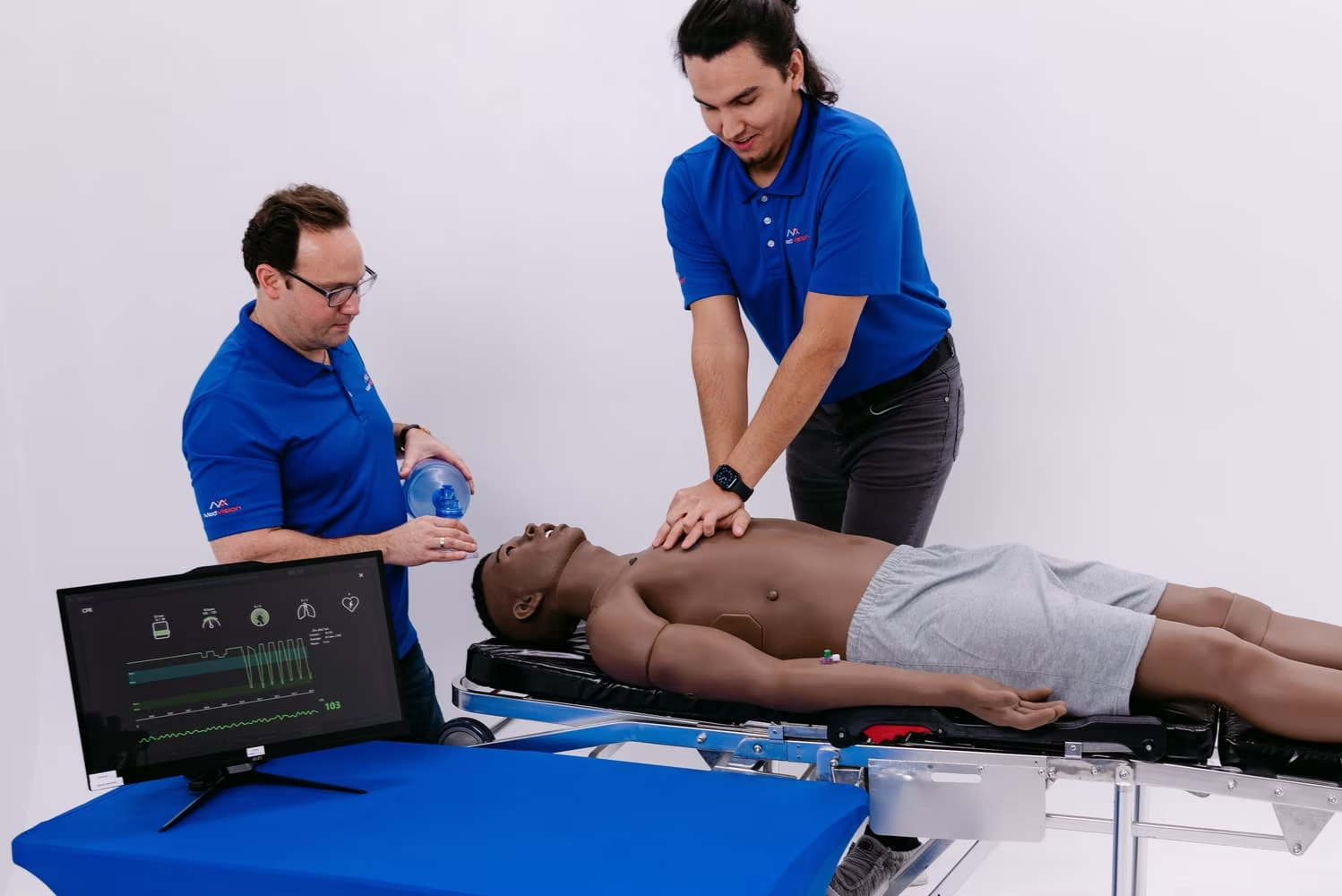
How does physical mannequin simulation enhance tactile learning?
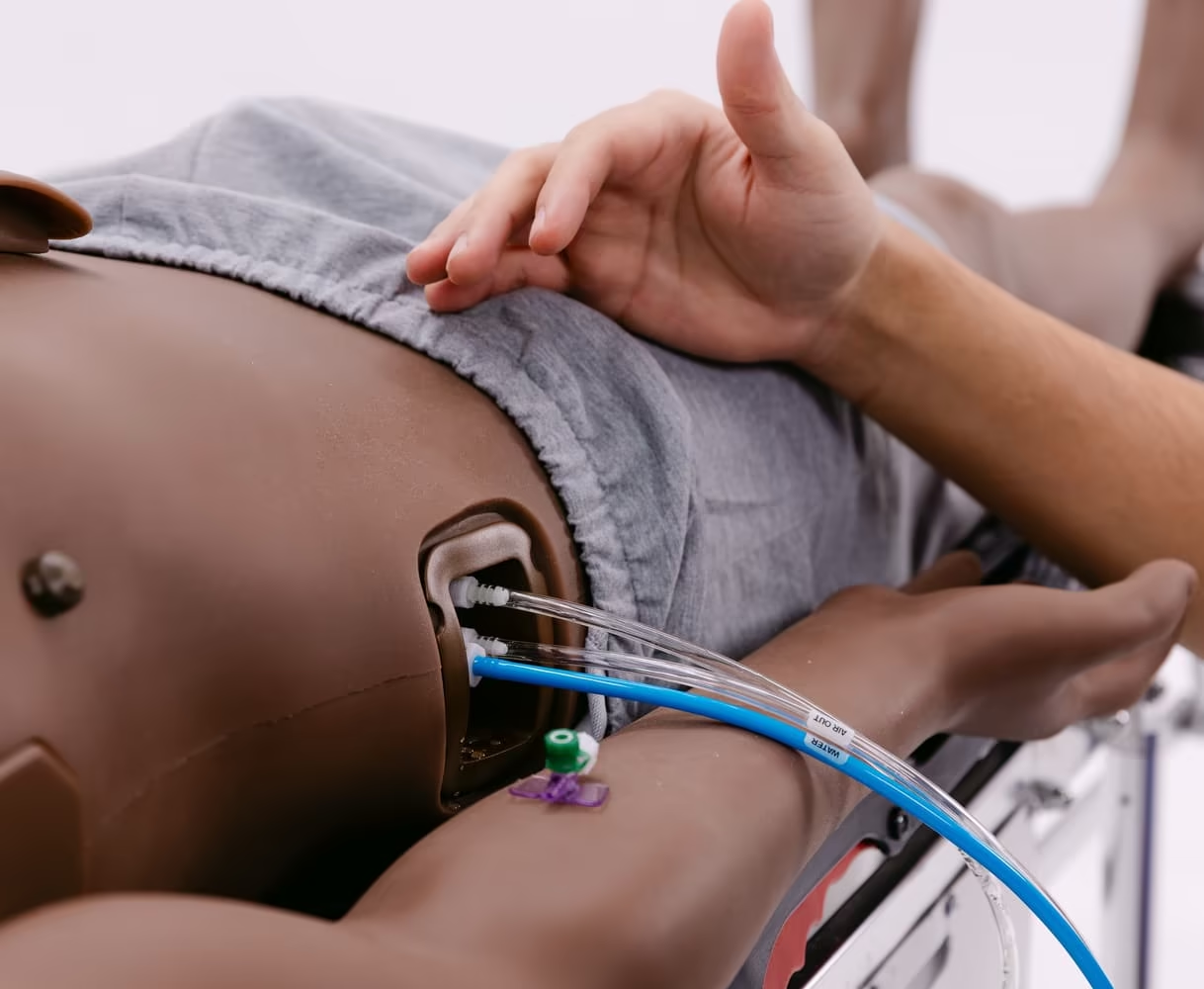
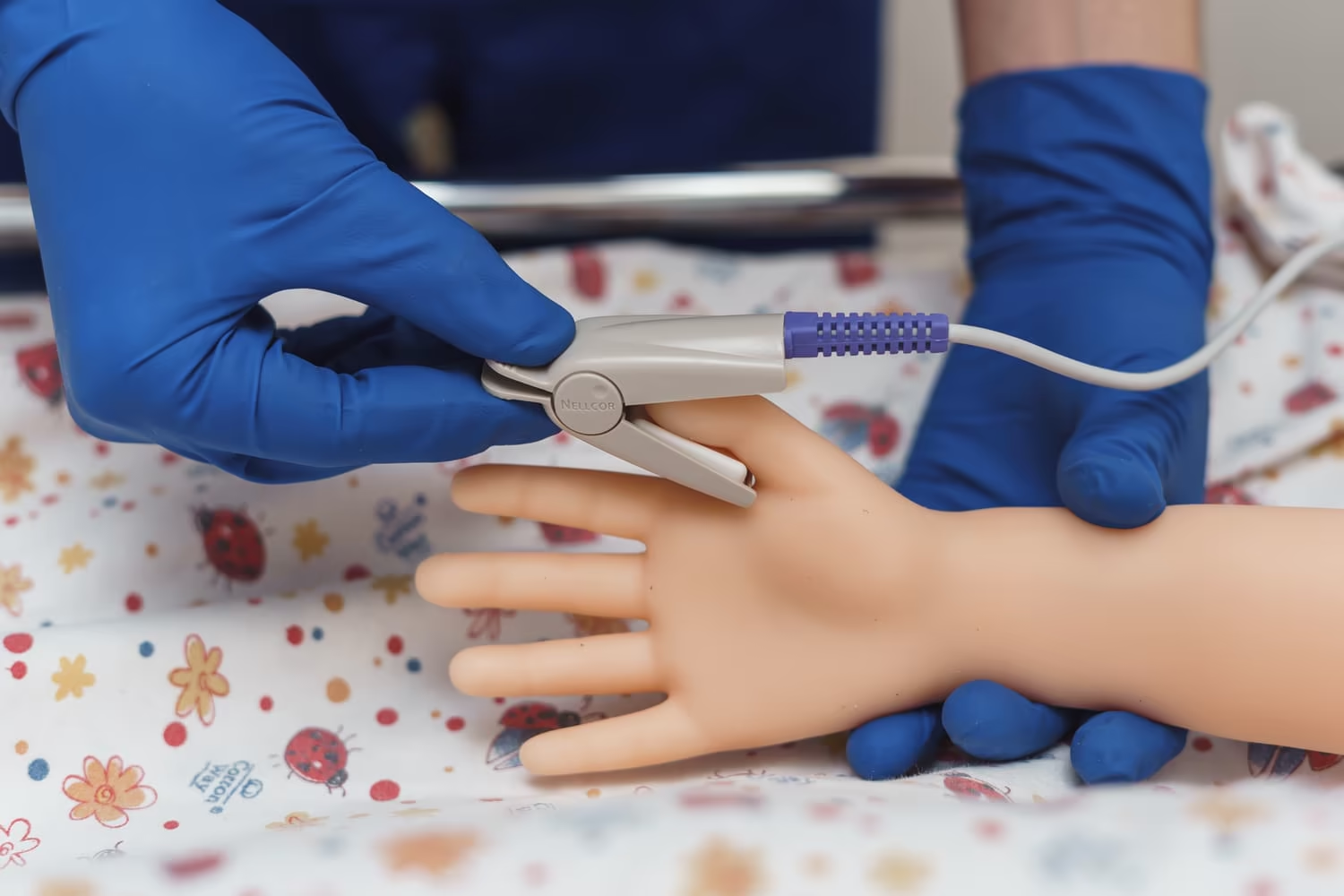
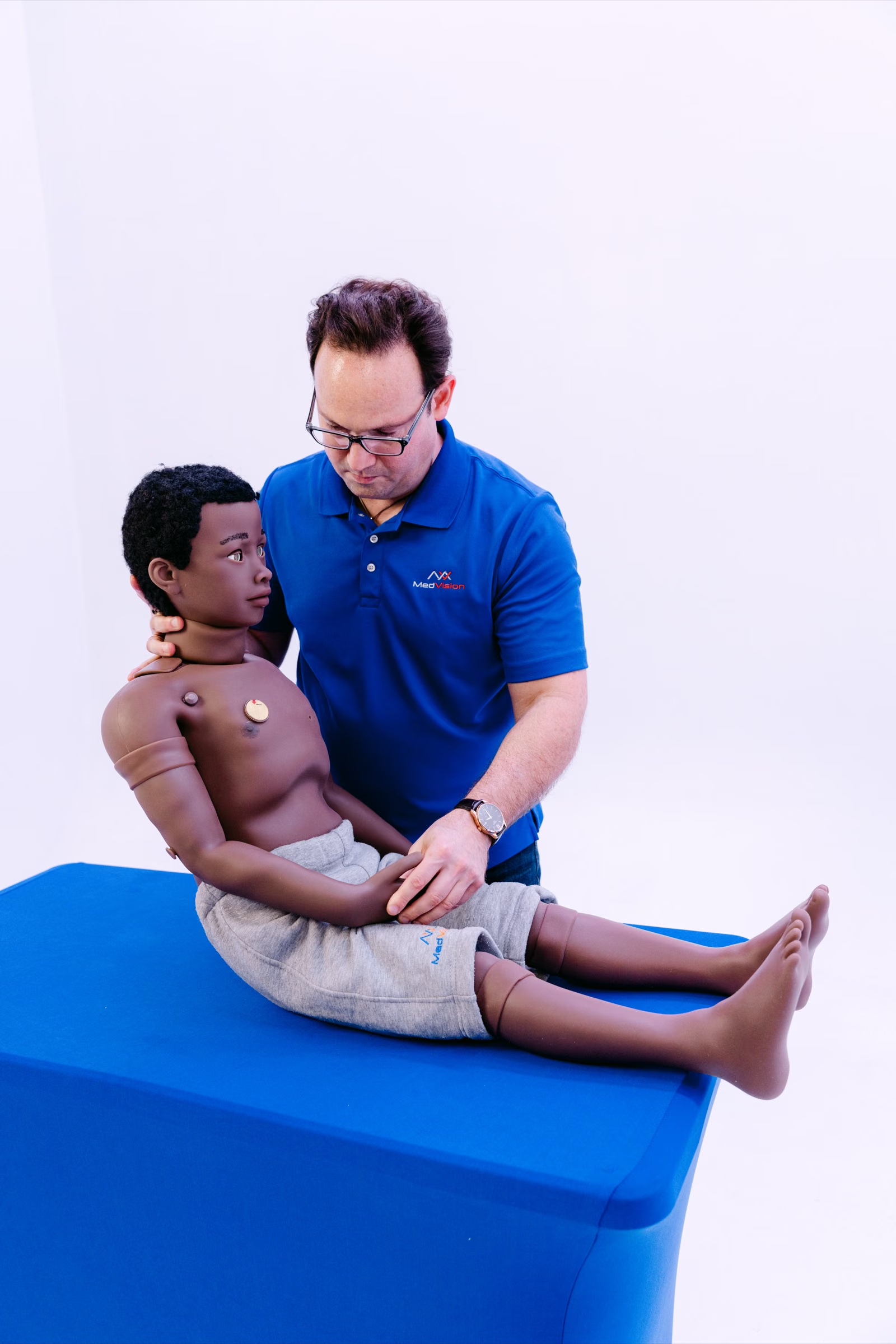
Traditional mannequin simulation utilizes anatomically accurate physical dolls equipped with highly sophisticated internal mechanics and fluid systems. A standard manikin training session allows learners to physically palpate pulses, insert intravenous lines, and compress the chest. This crucial tactile resistance is currently impossible to replicate entirely through a digital headset.
Physical simulation excels at developing the precise psychomotor skills required for aggressive surgical and emergency interventions. When a healthcare professional executes an intubation on a physical model, they experience authentic mechanical difficulty. This physical practice directly builds critical muscle memory that translates to real-world patient care.
However, operating these complex mechanical systems requires immense logistical and financial support from the healthcare facility. Advanced robotic units are exceptionally heavy, demand dedicated laboratory space, and require continuous mechanical maintenance. Furthermore, scenario variables are strictly limited by the physical hardware's built-in mechanical capabilities.
What makes virtual reality revolutionary for clinical education?
Immersive virtual reality technology instantly transports users into fully rendered, 360-degree digital healthcare environments. By wearing a specialized vr headset for simulation, a healthcare student can interact with a highly dynamic virtual patient who exhibits complex symptoms during the simulation. This unprecedented digital vr flexibility is rapidly transforming modern healthcare training globally.
The primary advantage of vr in healthcare training is its unparalleled scalability and instantaneous environmental variability within the simulation. A single digital vr headset can instantly run a simulation of a chaotic emergency room, an isolated healthcare clinic, or a busy surgical theater. Instructors can seamlessly alter the digital patient's condition in the vr simulation, forcing rapid diagnostic adaptation.
Moreover, simulation through vr effectively eliminates the massive physical footprint required by traditional healthcare simulation laboratories. Medical students can complete complex diagnostic simulation scenarios from their dormitories using portable vr hardware. This wide accessibility democratizes healthcare education, allowing continuous vr engagement without expensive physical simulation infrastructure.
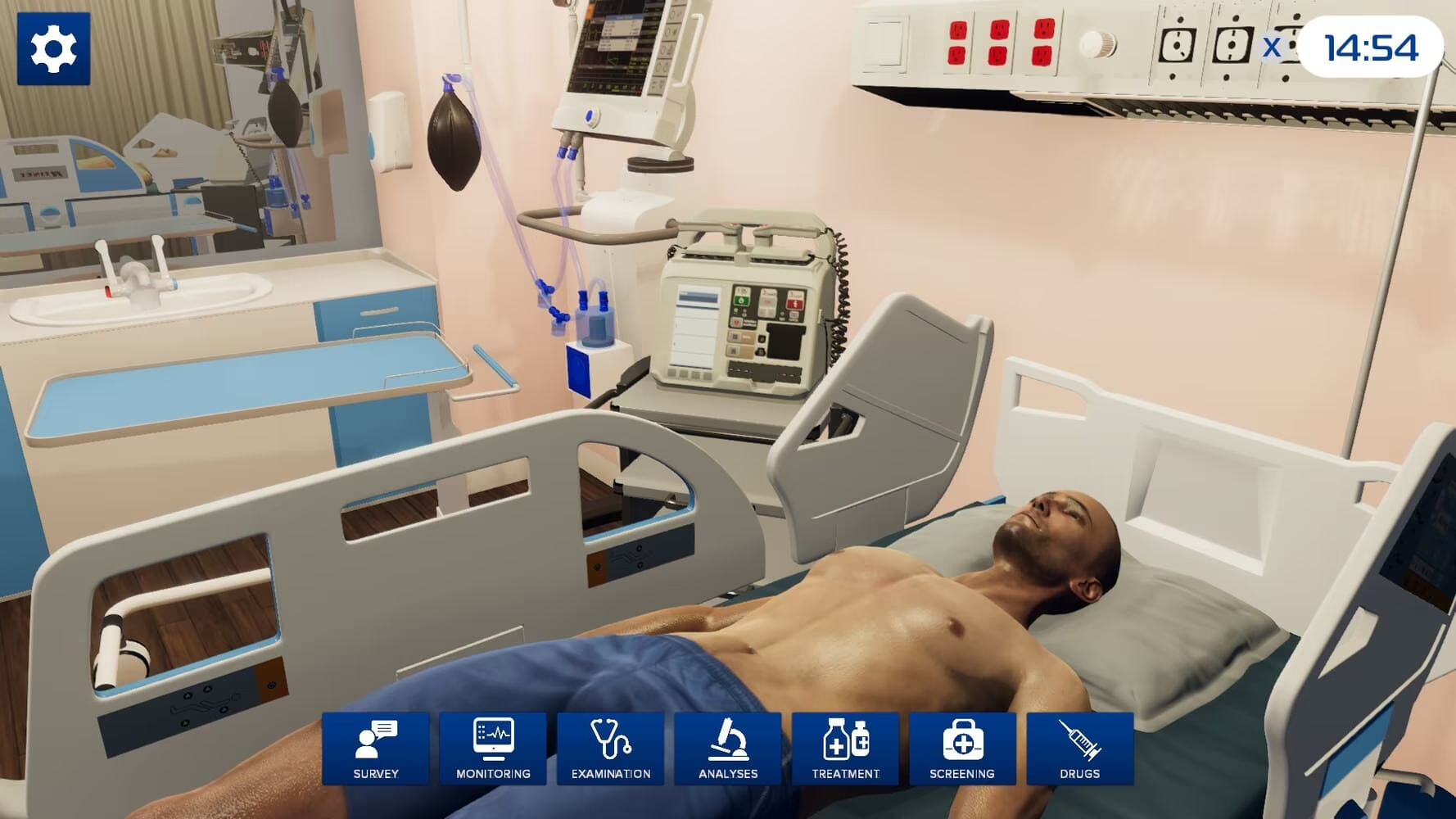
Why is cognitive development different in a vr environment?
While physical models strictly teach your hands what to do, vr fundamentally excels at teaching your brain how to think. Digital simulation forces learners to navigate complex decision trees and manage limited clinical resources efficiently. These intense critical thinking exercises are notoriously difficult to stage in standard physical rooms.
In a digital healthcare scenario, the psychological immersion provided by virtual reality can be astonishingly profound. Advanced vr software accurately replicates the exact visual stress of massive trauma or subtle facial micro-expressions. Learning to read these visual cues builds deep diagnostic intuition, a crucial component of advanced clinical competency.
Conversely, a digital virtual patient cannot currently provide authentic haptic feedback for delicate fine motor tasks. Attempting to learn the precise pressure required for a spinal tap using only basic vr controllers is fundamentally inadequate. Therefore, institutions must carefully balance cognitive digital exercises with robust physical simulation.
How do financial investments dictate simulation choices?
Budget allocation remains a universally critical factor for any modern healthcare institution aiming to expand its simulation capabilities. Purchasing a top-tier robotic simulation model for healthcare requires a massive initial capital expenditure, often exceeding hundreds of thousands of dollars. In stark contrast, deploying a fleet of vr headsets for vr simulation represents a significantly lower financial barrier for healthcare providers.
When evaluating the long-term return on investment, simulation administrators must meticulously calculate all ongoing maintenance costs in healthcare. Physical simulation hardware degrades rapidly under heavy mechanical stress, necessitating highly expensive replacement parts. Meanwhile, vr simulation systems primarily require digital subscriptions and occasional vr hardware upgrades for sustainability in healthcare.
This financial efficiency makes virtual reality incredibly attractive for expanding university healthcare programs with limited capital for simulation. By shifting preliminary observational simulation training into vr, hospitals conserve valuable disposable physical healthcare resources. Traditional healthcare relies heavily on single-use items, which quickly drains departmental budgets during live physical simulation training.
Can we combine vr with physical models for optimal results?
The absolute pinnacle of modern healthcare education involves deeply integrated hybrid simulation environments. By wearing an augmented headset while interacting with a physical model, learners receive the best of both methodologies. They feel the physical silicone resistance while seeing dynamic digital symptoms superimposed accurately via vr.
This mixed approach allows a virtual patient to bleed digitally over a physical torso, bridging the tactile gap. Such hybrid simulation setups are currently the primary focus of extensive academic research globally. Early data suggests that blending physical touch with digital rendering dramatically accelerates the mastery of complex procedures.
Implementing these advanced systems requires highly specialized technical support teams within the healthcare facility. The synchronization between physical sensors and digital vr overlays must be absolutely flawless at all times. If the visual feedback lags behind the physical touch, the educational illusion instantly shatters.
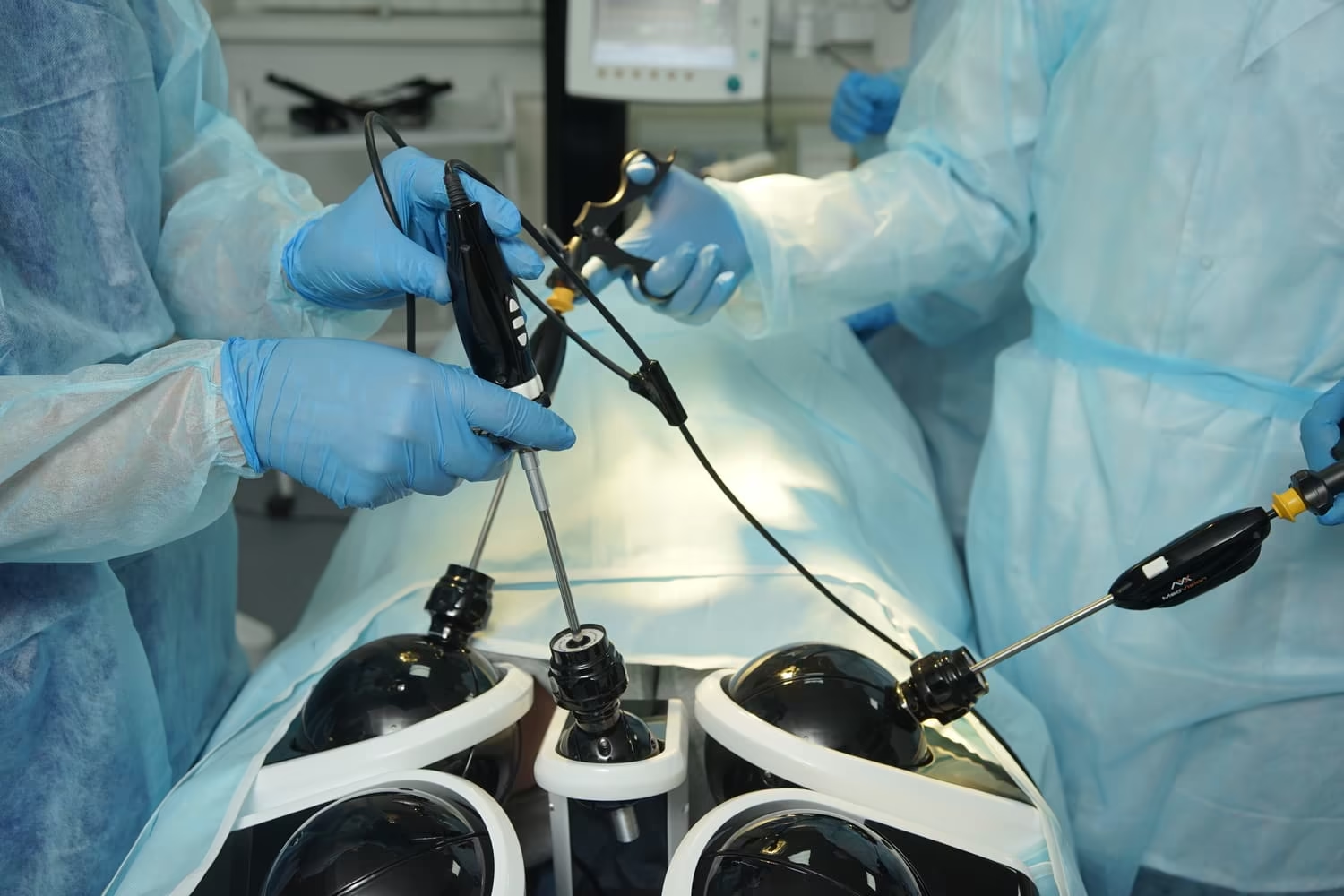
What does recent clinical research reveal about outcomes?
Extensive clinical research published in authoritative journals, such as those found on PubMed, continuously evaluates these modalities. Data clearly indicates that vr is highly effective for reducing medical errors related to poor decision-making. Digital simulation fundamentally improves team communication during high-stress emergency scenarios.
However, another critical study will quickly point out that physical simulation remains entirely irreplaceable for acute surgical preparation. The general consensus across the healthcare sector is that neither technology should completely replace the other. Instead, they serve entirely different, complementary roles within a comprehensive medical education curriculum.
Effective clinical practice relies heavily on seamless interprofessional communication among diverse specialist teams. Traditional mannequin simulation excels at bringing diverse teams into a single physical room. This shared physical presence fosters organic communication, spontaneous leadership dynamics, and realistic spatial coordination around the operating table.
Will artificial intelligence redefine simulation entirely?
The integration of artificial intelligence is currently transforming the baseline capabilities of every modern virtual reality platform. AI algorithms can dynamically alter a virtual patient's responses based on the ongoing decisions made by students. This ensures that no two training scenarios in vr are ever exactly alike.
Furthermore, AI-driven simulation software can automatically adapt the scenario's difficulty level to match user proficiency. If a learner excels at basic diagnostics, the vr system seamlessly introduces confounding variables to test critical thinking. Such personalized pathways represent the undeniable future of advanced healthcare training methodologies.
These intelligent systems also include automated assessment features that instantly generate comprehensive performance reports. By drastically reducing the administrative burden on instructors, faculty members can dedicate more time to personalized mentorship. Ultimately, the fusion of AI and virtual reality will continuously elevate global patient care standards.
FAQ
A high fidelity simulator is an advanced, life-like physical model or sophisticated vr program replicating human physiology accurately. In healthcare simulation, these tools are utilized to create highly realistic scenarios. They strictly require complex decision-making and advanced clinical interventions from participating medical learners.
Neither is objectively better; they serve entirely different educational purposes. VR is vastly superior for cognitive training, rare scenario exposure, and deep diagnostic reasoning. Conversely, physical models are strictly necessary for developing tactile skills and muscle memory required for surgery.
Currently, virtual reality cannot entirely replace real patient interaction or physical simulation hours. Regulatory bodies in healthcare clearly recognize digital training as a powerful supplementary tool. It drastically enhances preparation, but physical tactile experience remains a mandatory requirement for official medical licensing.
Virtual demo
See it on a real simulator
A MedVision specialist shows the simulator live and answers your questions. Remote setup included · Online Training Included.
Request a virtual demo