The Simulation Environment
1. Tell us about your role at Phelps Health and how simulation supports clinical education across your organization.
I am the SIM Educator at Phelps Health in Clinical Education. SIM mannequins assist us to teach our MAs (Medical Assistants), PCAs (Patient Care Assistants), LPNs (Licensed Practical Nurses), Healthcare students (Community College Healthcare Students – Clinical Care), Adolescent Medical Camps (13-16yrs old), and RNs (Registered Nurses), to further advance bedside care for our rural population. This assist with the healthcare staff to have greater knowledge to care for patients in rural clinics, hospital-based clinics and patients within our community hospital. Also, helps in understanding, implementing and managing the acute/critical care events in our patients.

2. What types of learners and clinical teams regularly train with Leonardo?
Stated above.
3. What kinds of clinical situations do you consider most important to recreate through simulation?
Acute/Critical care events, such as BLS, Mock CODE BLUEs, Anaphylaxis/Cardiac shock. Also bedside care, baths, foley insertion, blood pressures, etc. Room evaluations, when a healthcare personal has to look at the room and catch the inappropriate care measures present in the environment. Standard clinical care to learn when providing care to a patient.
Educational Philosophy
4. What do you believe separates a good simulation experience from one that truly changes clinical practice?
The knowledge the Clinical SIM Instructor can present to the SIM experience relating the event(s) to as real of a clinical event or patient experience as possible.
5. How does realism influence the quality of learning during simulation?
Enhances the recognition, awareness, applied knowledge, analyzation, evaluation and creation (supporting Blooms Taxonomy) to the event or scenario, to lay a mental impression upon the student or clinical personal to remember the care process to implement when such prior issues arise in a care setting.
6. In your experience, how important is learner immersion to achieving meaningful educational outcomes?
Essential
Leonardo in Practice
7. How has Leonardo changed the way you design or facilitate simulation experiences?
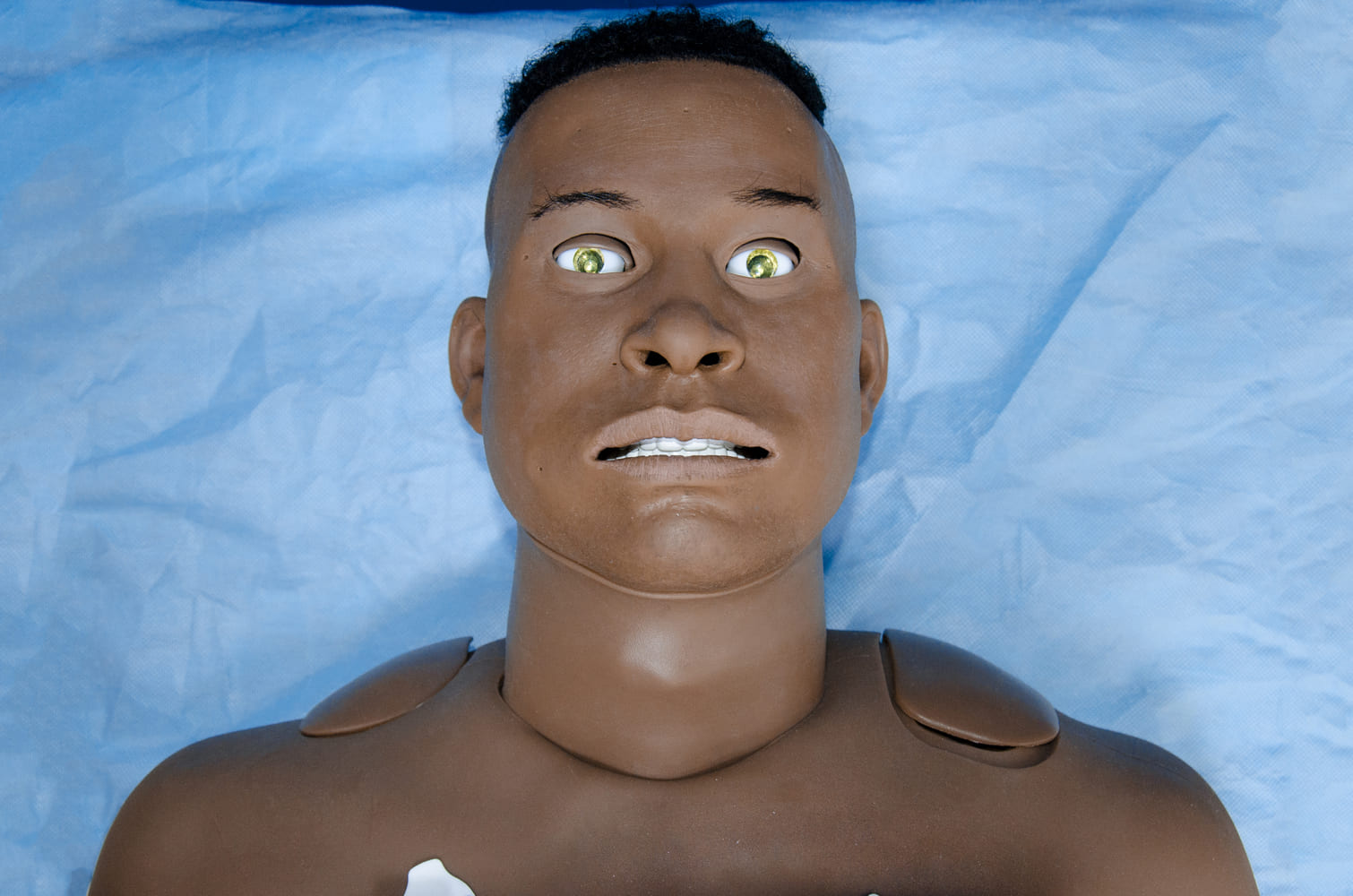
Creates a greater sense of awareness to human response, allowing the mental connection to be established for care giver to mannequin to be a real connection for the learner to gain a deeper clinical knowledge in healthcare.
8. Can you describe a scenario where Leonardo allowed learners to experience the complexity or uncertainty of real patient care?
Mock CODEs; Choices and decisions by the healthcare personal gives a clinical pathway for the outcome of the mannequin. Timely and appropriate decision making creates strong clinical outcomes. But delayed decisions, poor quality choices of implementing care measures can have effects on the patient which can deteriorate the mannequin’s health leading to further negative complications to occur with the mannequin/patient.
9. Which aspects of Leonardo contribute most to creating a psychologically realistic clinical environment?
- The ability to talk
- audible lungs sounds
- the ability to change when a medical measure of care of occurs
- correlation of cardiac monitor to clinical event
- the ease of alternating the patients physical response to care measures given by clinical personnel (learner).

Learner Immersion
10. At what point do learners stop thinking of Leonardo as a simulator and begin responding as though they are caring for an actual patient?
This is very individual, depending on the learner and how the learner is working with the simulation event. Leonardo is great for a learner who learns by applying the concept through physical interaction or kinesthetic learning (touching/manipulating/physical interaction). But other times individuals will be more comfortable with Leonardo after second or third experience with SIM instructional education.
11. Have you noticed changes in learner behavior once that suspension of disbelief occurs?
Yes, very much so. Also, I see the energy of the event or experience being learned to start to take a physical response with the clinical personnel (learner). You can see the intensity in which they interact with Leonardo, the briskness of their moments, the verbal concerns which they express to Leonardo, they’re even sweating, and their communication among their peers in a SIM is in a timely information.
12. How does that level of immersion influence clinical decision-making during a scenario?
Depends on their clinical decisions the students or healthcare personnel make.
13. Have you observed learners communicating differently when the simulation feels more authentic?
Yes, and when they have more experience with SIM instructional education or a SIM mannequin.
Clinical Reasoning
14. How has Leonardo influenced learners' ability to recognize subtle changes in patient condition?
I feeling using Leonardo for SIM education assist with prompter decision making by the healthcare personnel or students.
15. Does the simulator encourage learners to think through evolving clinical situations rather than simply performing isolated skills?
Yes, because the SIM creates a story starting at pre-brief and through the Simulation a story of the patient and patient’s care occurs. This educational process evolves to involve the student/healthcare personnel to reacting to the mannequin and healthcare decisions and needs the mannequin requires.
16. Have you noticed improvements in clinical reasoning, prioritization, or decision-making during simulation?
This is said to occur by the student and healthcare personnel but I have only had this position since May 2026. So, I have not seen repeating students yet.
17. Can you recall a moment when learners had to adapt to an unexpected change in the patient's condition, just as they would in clinical practice?
A majority of SIMs this does occur, reason to use SIM instructional education. Example, normal patient at hospital for antibiotic care, had an anaphylactic reaction to antibiotic. Starts to deal with anaphylactic reaction, airway compromise occurs, and the patient heart stops and CODE BLUE event develops.
Confidence & Competence
18. How has Leonardo influenced learners' confidence before entering real patient care environments?
- Create greater knowledge of clinical events
- Enhanced self esteem for the students or clinical personnel in providing urgent or emergent care
- Understand the importance of Teamwork and Communication.
19. Beyond confidence, have you observed growth in clinical competence or readiness?
Still new to this position at this hospital, so I expect for this to occur because this is a driving goal set by the SIM Lab to see from individuals getting education by SIM Lab.
20. How does repeated exposure to realistic simulation affect learners' performance over time?
Per Bloom’s Taxonomy, this develops the higher tier of education with each repeated learning event. It becomes building blocks to form a platform, from remembering what to do, to understanding the care process, then applying the care process, analyzing the care measures occurring in the SIM event, to evaluation of the SIM responses and last creating a clinical process of optimizing performance of the SIM in learning the clinical process.

Instructor Perspective
21. How has Leonardo expanded what instructors are able to teach through simulation?
The realization and timely manner of Leonardo in assisting with the performance of the SIM lessons to correlate with real life events.
22. How does Leonardo support more meaningful debriefing conversations after a scenario?
He provides a more real experience because of his behaviors he can reflect through a SIM lesson.
23. Have the simulator's physiological responses or detailed performance data changed the way instructors evaluate learner performance?
Yes, just depending on the SIM instructor, depending on SIM learner, can depend on the SIM Lesson and significance, along with quality of the lesson received.
Team Performance
24. How has Leonardo influenced teamwork, communication, or leadership during interdisciplinary simulations?
Enhanced teamwork, illustrated the importance of communication and promotes primary leadership by the development of a greater knowledge of clinical care.
25. Have you observed teams functioning differently when caring for a simulator that behaves like a real patient?
Yes, teams are more in tune with the SIM mannequin and the events correlating with the SIM lesson/mannequin care process. I feel overall there is a better learning process.
26. How does Leonardo help prepare clinicians for high-acuity, low-frequency events that are difficult to experience during routine practice?
With the novice/advice beginner nurses (1 yr. to 5 through 8 yrs. practicing at bedside), the scenarios assist with exposure and experiencing patient care events/tasks/medications/physiology/pharmacopeia which occur in an acute/critical clinical state of a patient care process. Giving the broader knowledge in how to manage acute/critical care events.
With the competent/proficient nurses (6/10 + years practicing at bedside), this assists the nurse to remain knowledgeable in latest best evidence practice of patient care. Keeping with the current practices recommended to manage and treat the acute care process of the patient regarding the acute/critical care event.
Outcomes
This data will come, started this position in May.
27. If another simulation educator asked what makes Leonardo an effective educational tool, what would you tell them?
His live performance he creates
Virtual demo
See it on a real simulator
A MedVision specialist shows the simulator live and answers your questions. Remote setup included · Online Training Included.
Request a virtual demo