AirwayVision Real-Time Airway Visualization
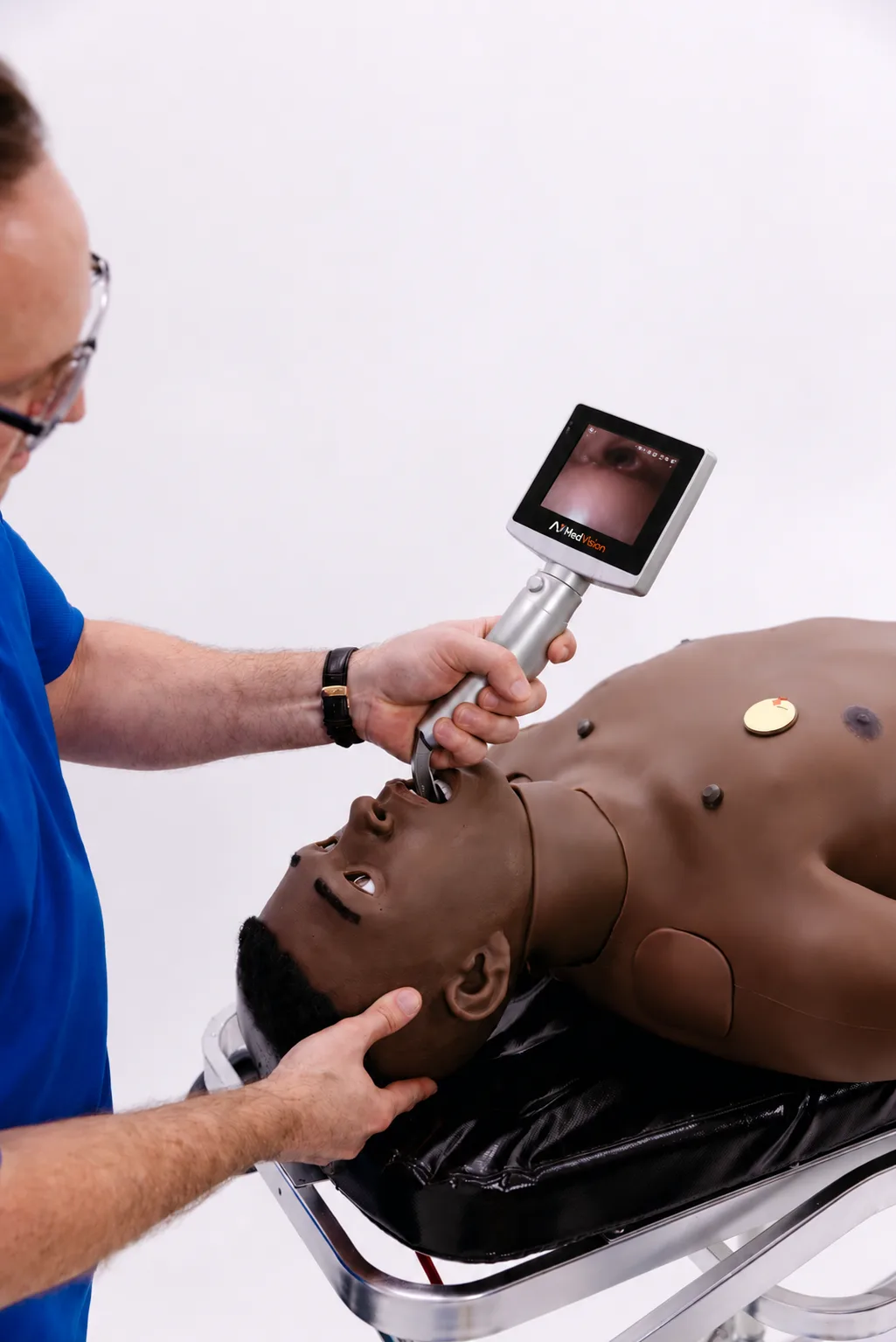
Airway Management. In Context.
Train Beyond Intubation
- A clear airway is only the beginning. Effective airway management training should prepare learners for what happens when conditions change.
- MedVision patient simulators feature visually and tactilely realistic airways, including complications such as laryngospasm and pharyngeal swelling.
- AirwayVision brings that realism into view — allowing learners to see the complication, navigate the airway, and respond in real time.
Beyond intubation. Into airway management.

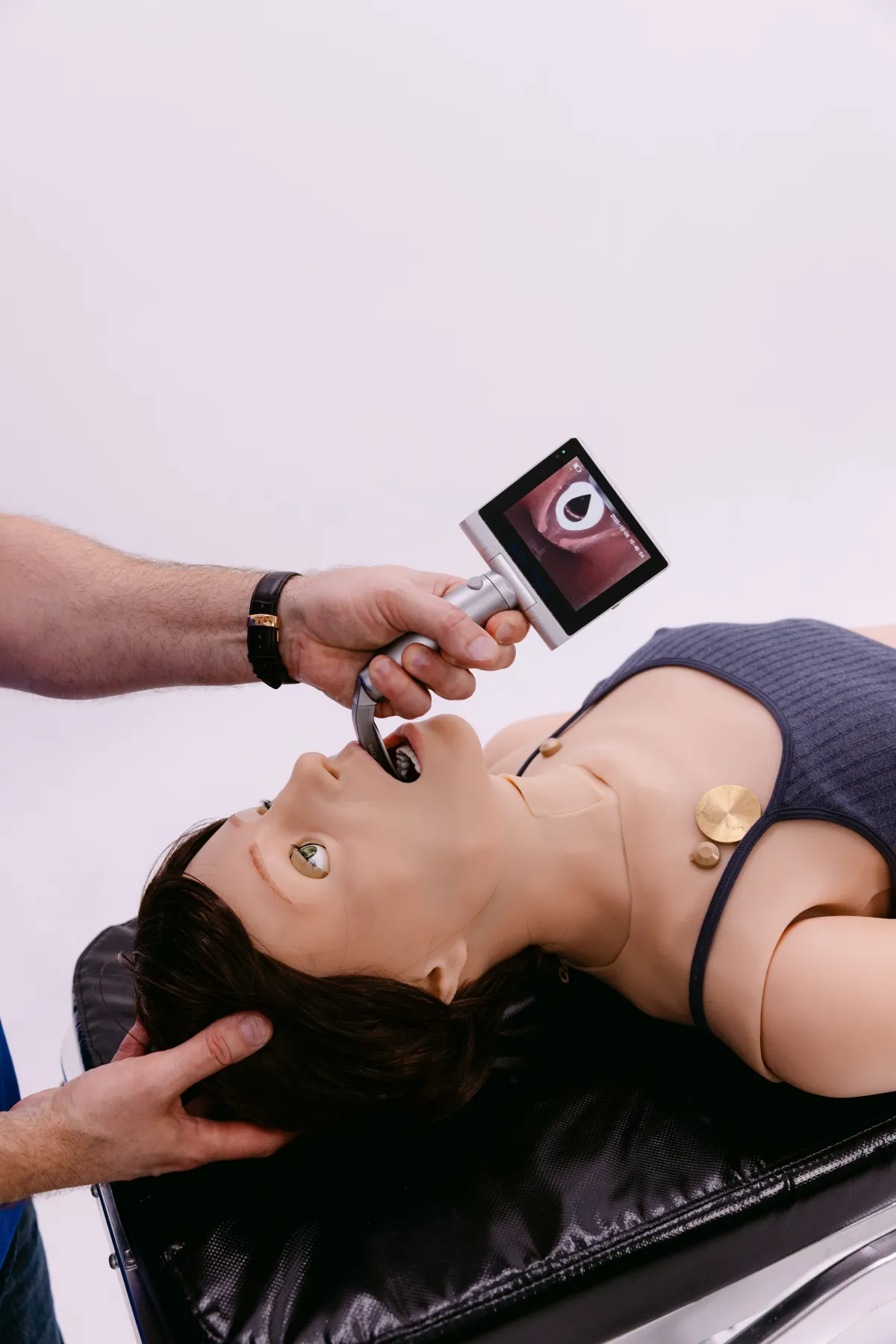
Technique in View
Connect Technique with What Happens Inside the Airway
- AirwayVision allows learners to see how blade position and manipulation change the airway view — connecting what they do with their hands to what happens inside the airway.
- Learners can observe anatomical landmarks, adjust their technique, and follow tube advancement in real time.
See it. Recognize it. Navigate it.
Train for Airway Complications
See the Challenge. Adapt the Technique.
Airway training becomes more meaningful when learners can see and respond to changing conditions. When used with compatible MedVision patient simulators, AirwayVision brings realistic airway complications into view, helping learners recognize changes, navigate the airway, and adapt their technique as the scenario develops.
Recognize changes
Learners see the airway change as the scenario develops.
Navigate the airway
Learners work through the complication with the view in front of them.
Adapt the technique
Learners adjust their approach in real time as conditions change.
This moves training beyond simply completing an intubation toward understanding and managing the airway in the context of the patient.
One Learner Intubates. Everyone Learns.
Make Every Procedure a Teaching Opportunity
AirwayVision makes the procedure visible beyond the learner performing it.
- Instructors can demonstrate
- Learners can observe
- Peers can discuss
Recorded procedures support review, debriefing, and skills assessment — helping educators examine not only the outcome, but the technique used to achieve it.
Don’t just see whether the tube went in. See how it got there.

Built for Simulation
Train. Reset. Repeat.
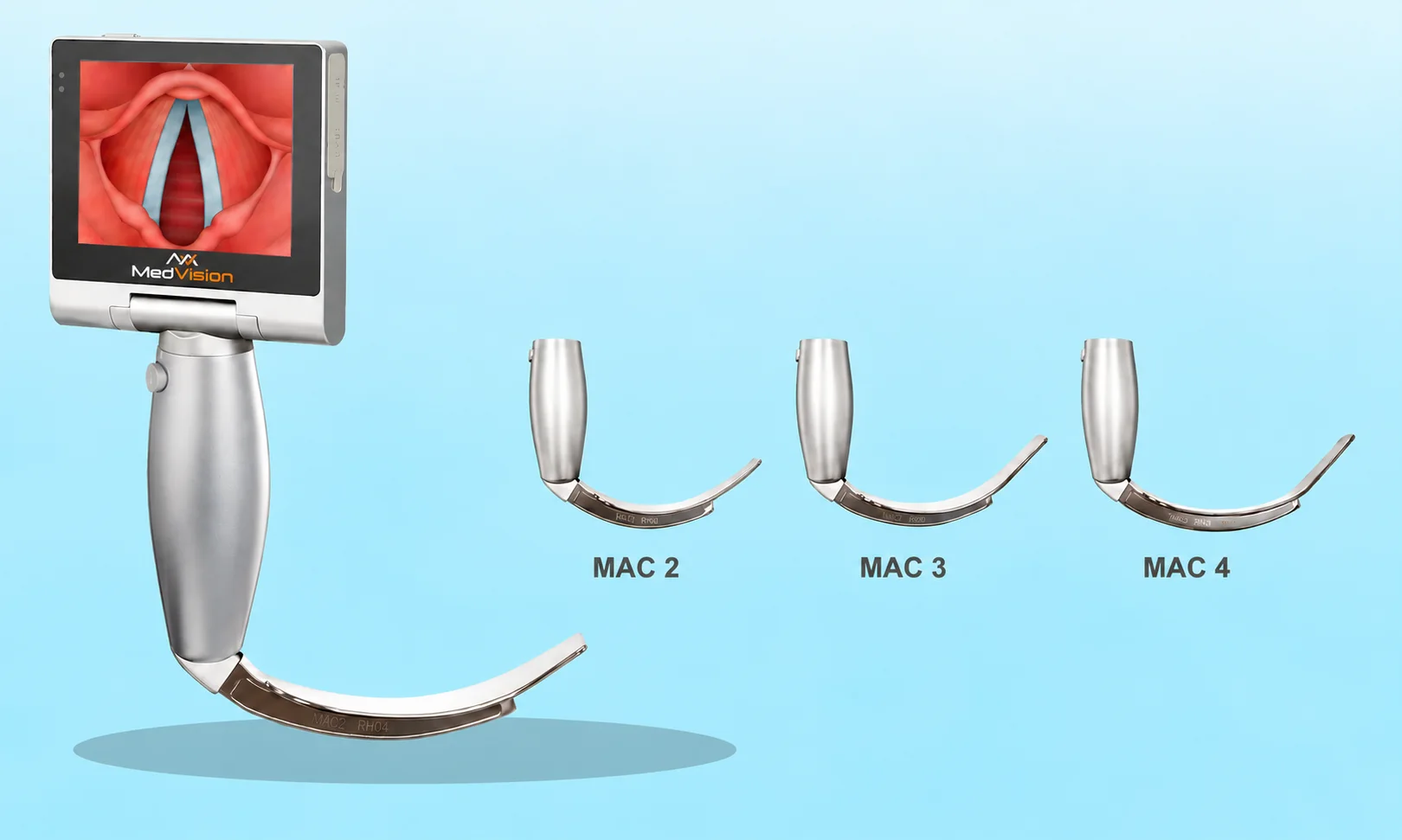
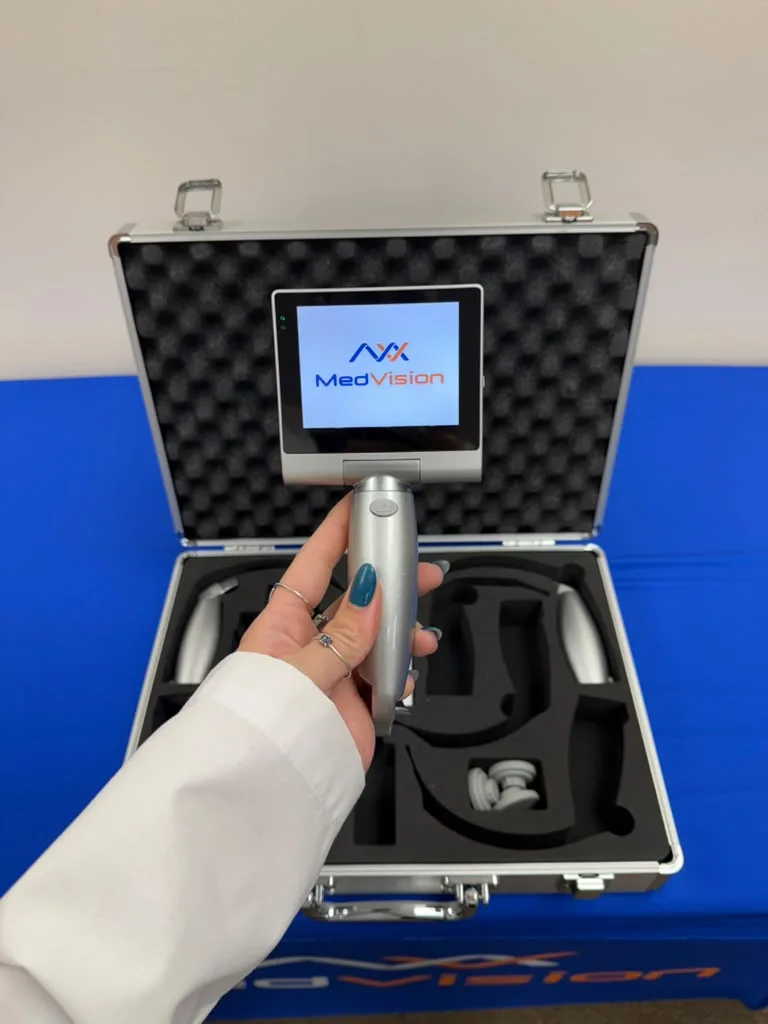
Portable, rechargeable, and designed for repeated practice, AirwayVision is ready for use across learners, scenarios, and simulation sessions.
- 3.5-inch touchscreen display
- Integrated megapixel camera
- Real-time color airway visualization
- Blade-tip illumination
- Adjustable handheld monitor
- Reusable Macintosh 2, 3, and 4 blades
- Rechargeable battery
- Custom MedVision carrying case
Designed for MedVision Patient Simulators
Bring Airway Visualization into Patient-Based Simulation
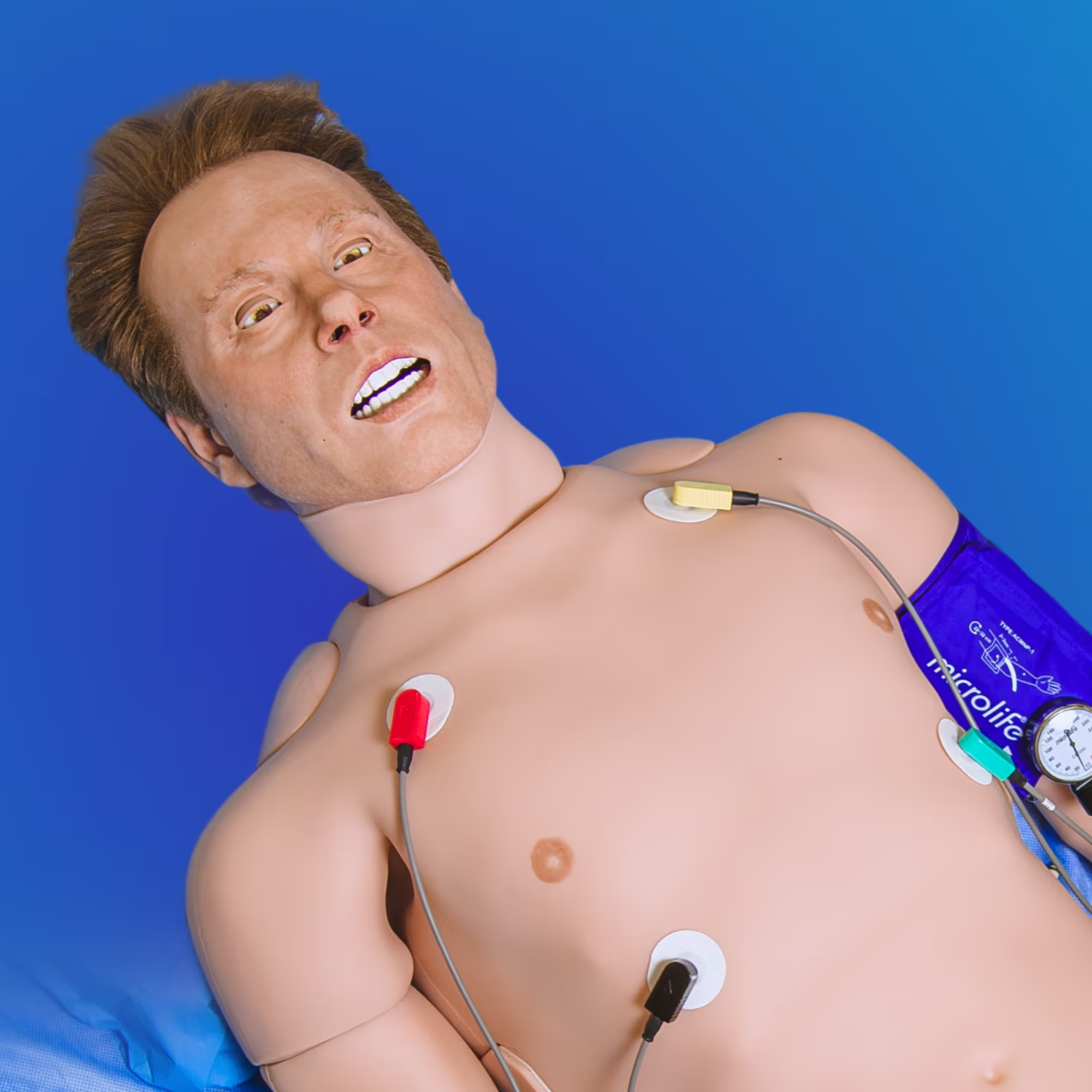
AirwayVision is designed to extend airway management training with compatible MedVision patient simulators. By combining real-time airway visualization with realistic airway anatomy and complications, educators can connect procedural technique with the broader patient scenario and create more complete airway management training experiences.
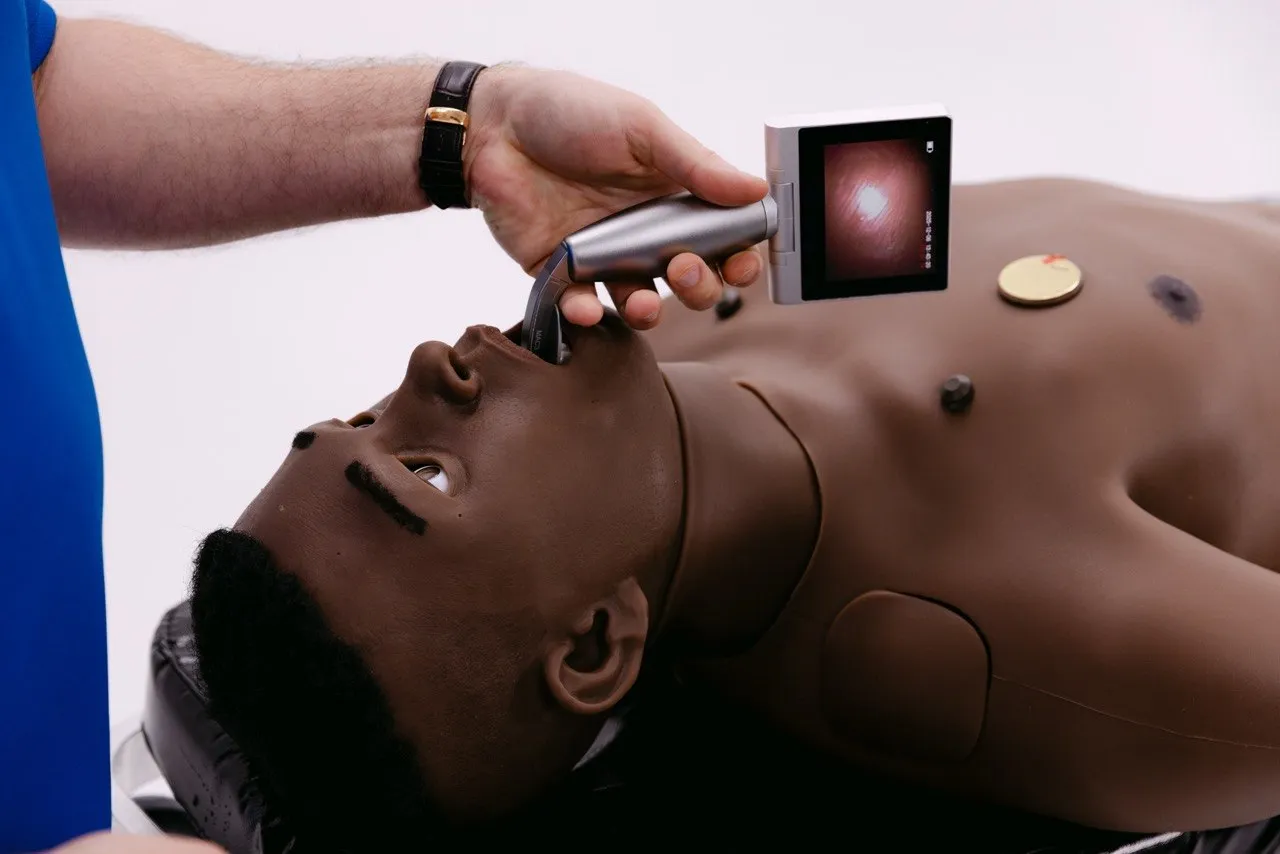
Leonardo
Expand Leonardo’s airway management training with real-time airway visualization.
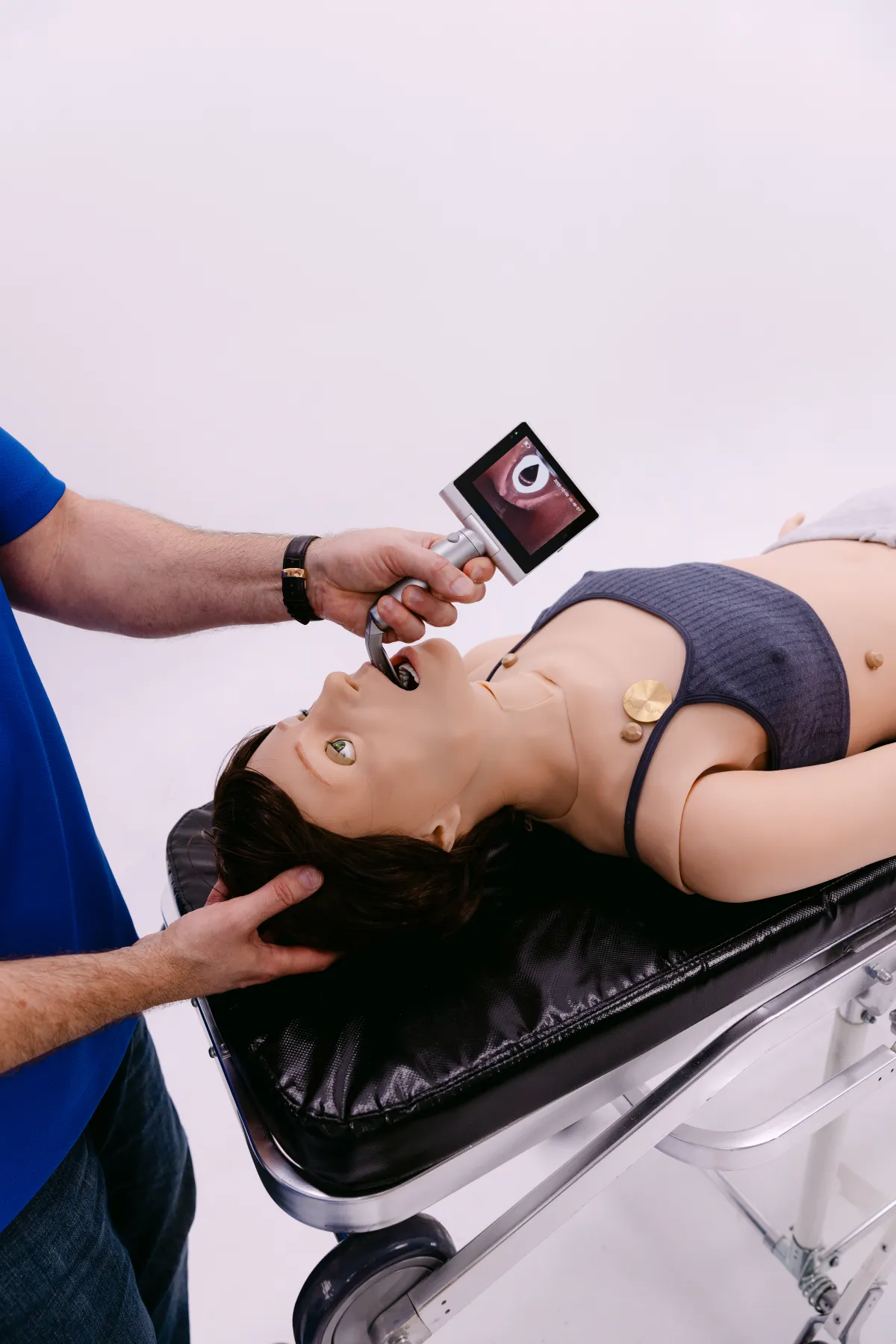
Lisa
Bring real-time airway visualization into your Lisa emergency and airway management scenarios.
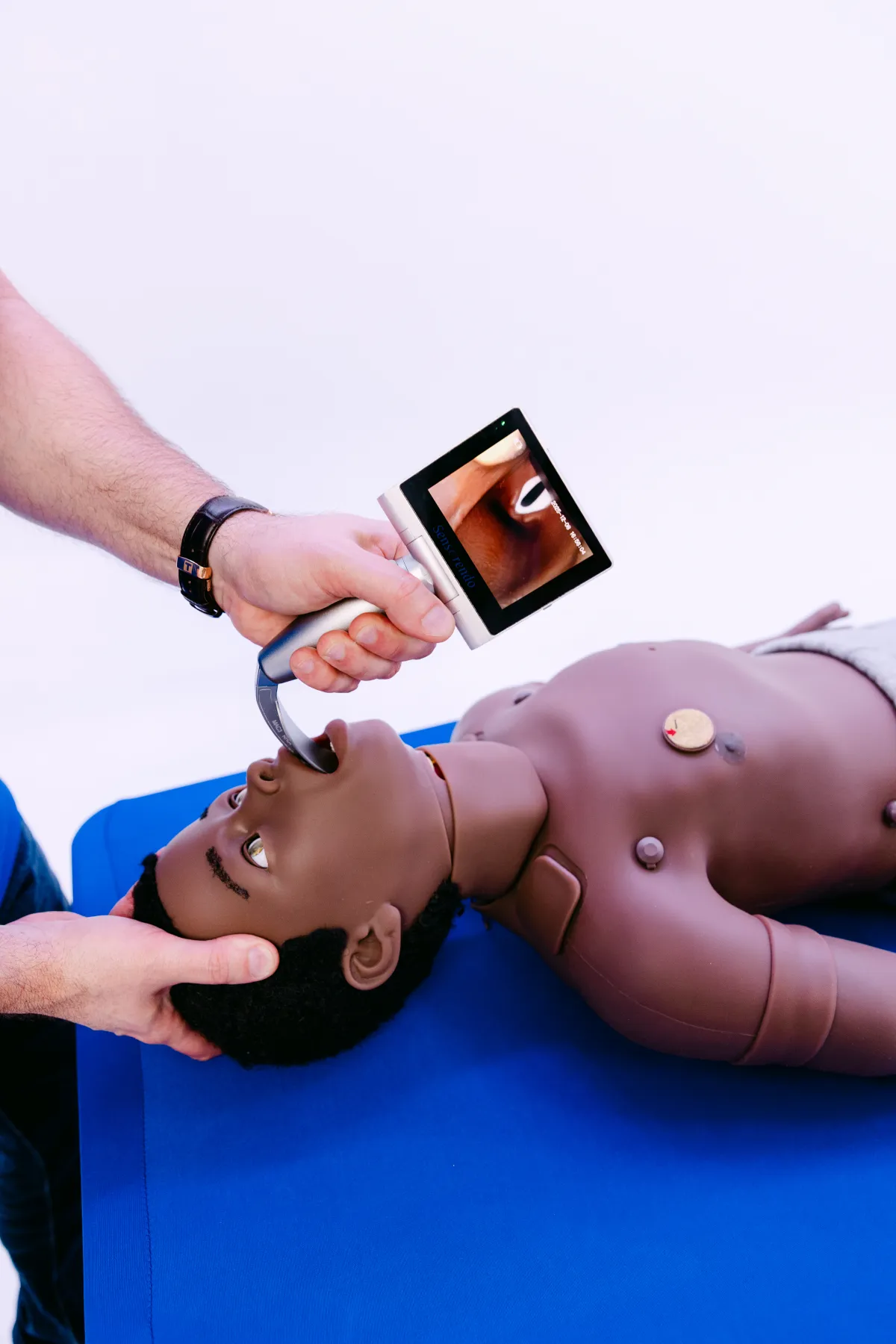
Arthur
Enhance pediatric airway management training with real-time airway visualization using Arthur and AirwayVision.
From Demonstration to Assessment
Make Airway Technique Visible
AirwayVision can support multiple stages of airway management education:
- Instructor demonstrations
- Guided intubation practice
- Hands-on skills training
- Airway complication scenarios
- Peer observation and discussion
- Procedure recording
- Debriefing and review
- Skills assessment
AirwayVision helps make airway technique visible, teachable, discussable, and assessable.
See More Than the Outcome. See the Technique.
Help learners understand airway anatomy, technique, tube advancement, and changing airway conditions through real-time visualization. Bring AirwayVision into your simulation training program.
Find more simulators



FAQs
MedVision is your one-stop shop for top-of-the-line medical simulators.
We understand the importance of realistic and reliable training equipment in the healthcare industry, which is why we provide our clients with only the best simulation manikins on the market.
With years of experience in the market, we have established ourselves as a trusted source for medical simulators. We carefully design and manufacture our medical training manikins to meet the highest standards of quality and accuracy, making them perfect for training. At MedVision, we offer a wide range of hospital training manikins, from basic models for beginners to advanced options for experienced professionals. We build our products with cutting-edge technology and realistic features to provide a hands-on learning experience for our clients; if you want to improve patient care, you want MedVision.
How are simulations used in healthcare?
Medical simulation is widely used in healthcare education to train medical students, nurses, physicians, and clinical teams. Simulation-based training allows learners to practice clinical procedures, diagnostic skills, patient assessment, and emergency response in a safe, risk-free environment. Healthcare simulation is commonly used in medical schools, nursing programs, hospitals, and simulation centers to improve patient safety and clinical outcomes.
How realistic is full code medical simulation?
High-fidelity medical simulation is extremely realistic and closely replicates real-life code blue and emergency scenarios. Advanced patient simulators can simulate cardiac arrest, respiratory failure, trauma, and other critical conditions with real-time physiological responses. Learners can perform CPR, airway management, defibrillation, medication administration, and team-based resuscitation just as they would in a real clinical setting.
What is high-fidelity medical simulation?
High-fidelity medical simulation uses advanced manikins and software to reproduce realistic human physiology, clinical signs, and patient responses. These simulators provide interactive feedback, allowing healthcare professionals to make clinical decisions and immediately see the results of their actions during training.

Patient simulators, task trainers and anatomy tables for nursing schools, hospitals and EMS programs.
Not sure which one fits your program?
SimulatorsSimulators
Pediatric simulators
Other simulators
Anatomy solutions
Surgical simulators
Contact
Monday — Friday9:00 AM — 5:00 PM EST
14300 Carlson CircleTampa, Florida, 33626-3003, USA
W9 form (PDF)© 2026 MedVision. All rights reserved.