
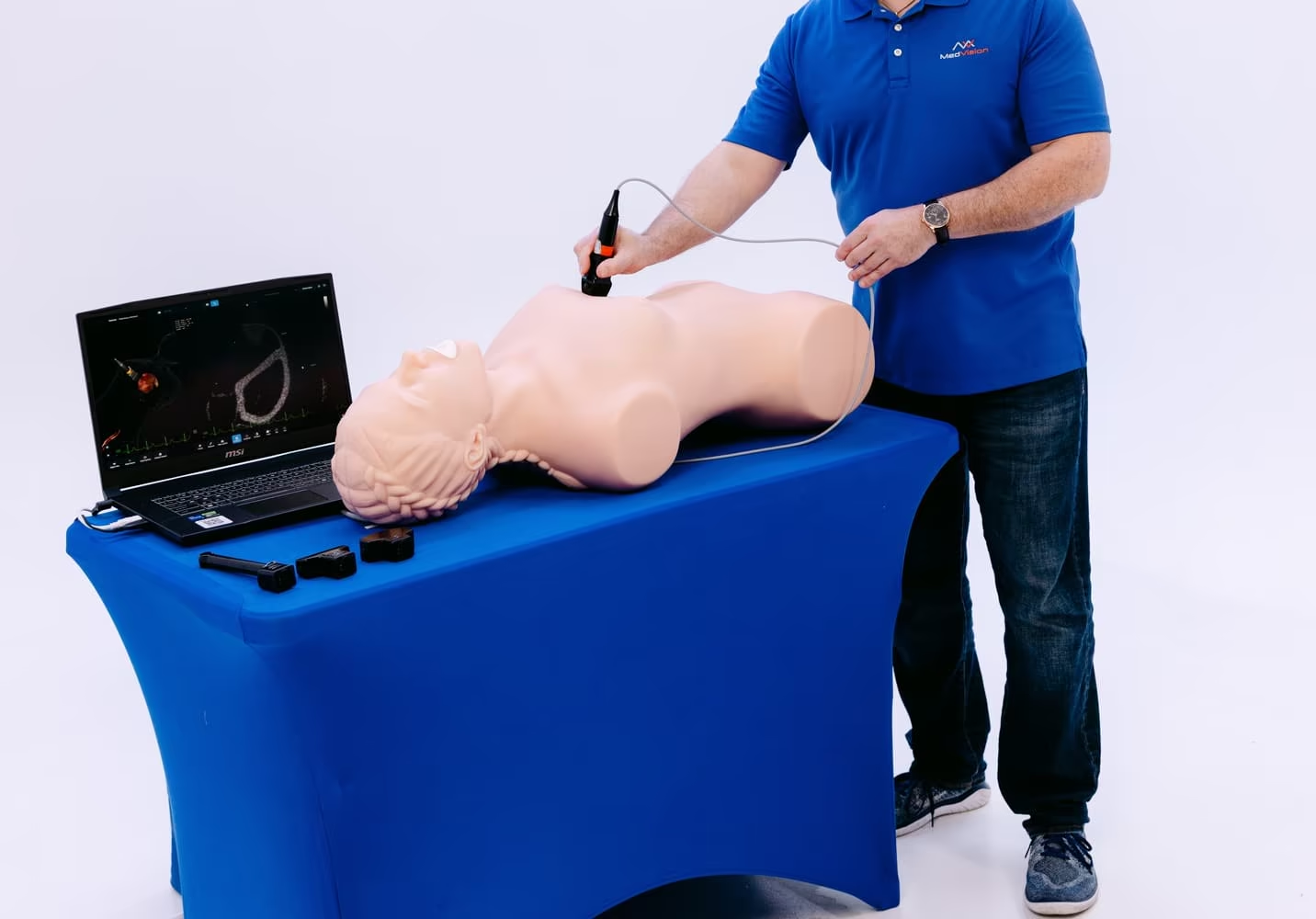
What is simulation program evaluation healthcare and how does it work?
What is simulation program evaluation healthcare? This concept defines the systematic assessment of educational methodologies utilizing clinical simulation to measure effectiveness and patient safety. Proper evaluation in modern healthcare ensures that clinical scenarios meet rigorous educational requirements. By analyzing these metrics, administrators can continuously improve their internal training protocols globally.
Regular evaluation validates the financial and educational investments made by any modern healthcare facility. A simulation center cannot operate effectively without assessing how well learners absorb critical information during the simulation. Therefore, integrating a robust evaluation strategy guarantees that the simulation strictly aligns with the latest clinical protocols.
This comprehensive approach identifies specific gaps in both faculty performance and student comprehension within the simulation. Every simulation session generates immense amounts of data that require structured evaluation to be truly useful. When a healthcare institution commits to regular evaluation, it fundamentally protects its long-term clinical integrity.
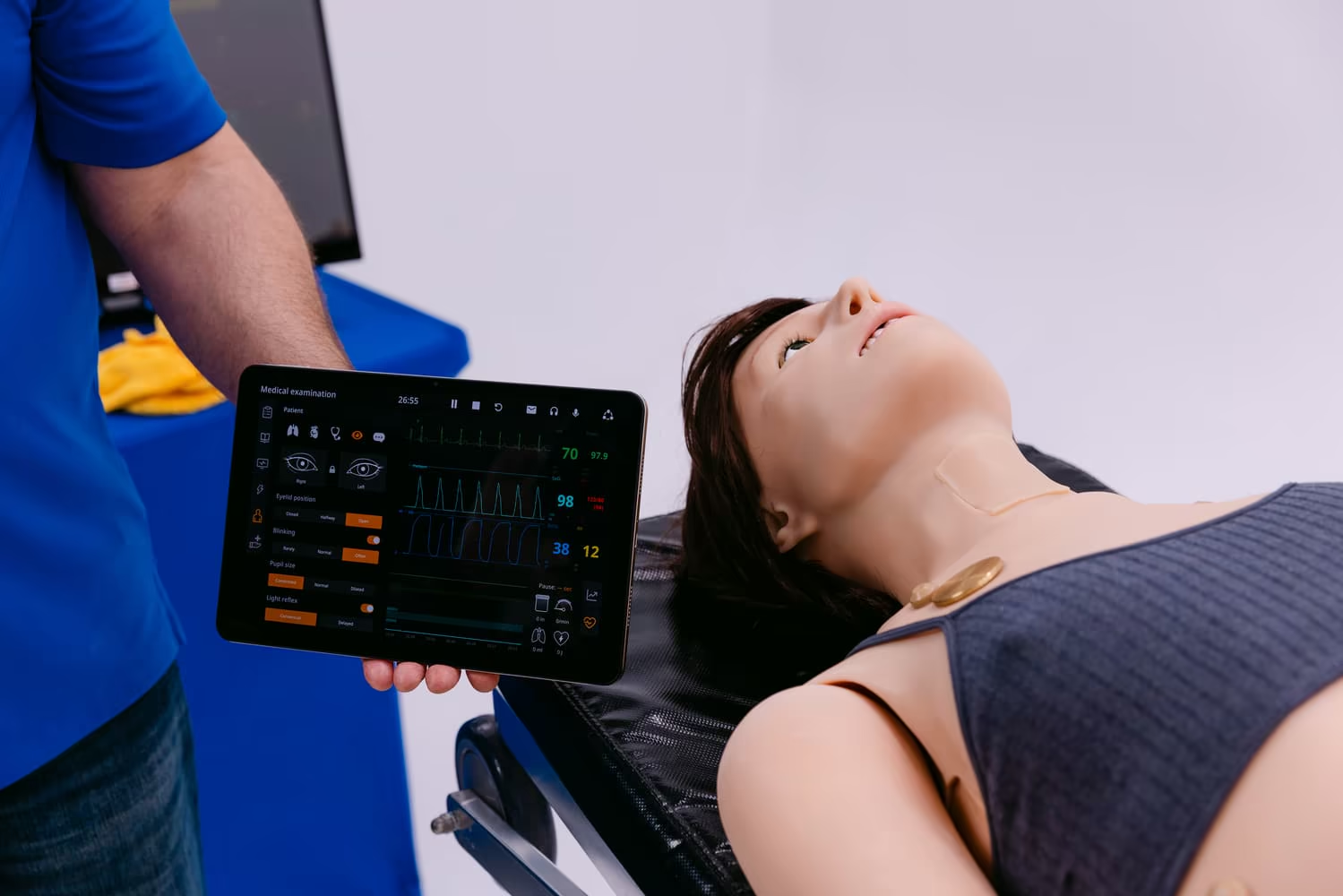
How do you measure the quality of a simulation session?
Determining the quality of a clinical simulation requires utilizing established rubrics and validated assessment tools. During the evaluation phase, instructors must meticulously analyze whether the simulation successfully achieved its primary learning objectives. High-quality healthcare training heavily relies on this objective evaluation to maintain its academic rigor and clinical relevance.
To accurately evaluate these programs, administrators often rely on internationally recognized frameworks for simulation. Organizations such as the International Nursing Association for Clinical Simulation and Learning provide strict standards for proper simulation implementation. Following this authoritative guidance ensures that your evaluation process remains universally credible and academically sound.
Key metrics used during the evaluation of a simulation typically include:
- Learner satisfaction and self-confidence post-simulation.
- Knowledge acquisition measured through pre- and post-evaluation tests.
- Behavioral changes observed in actual healthcare environments.
- Return on investment and overall simulation operational costs.
What role does debriefing play in simulation evaluation?
Debriefing is undeniably the most critical component of any simulation exercise conducted in a healthcare facility. It is exactly during this reflective evaluation that learners truly consolidate their clinical knowledge from the simulation. A poorly executed debriefing ruins the educational value of the entire simulation, rendering the subsequent evaluation useless.
Effective evaluation during debriefing requires trained facilitators who can guide the simulation conversation safely. In standard healthcare settings, the facilitator uses the simulation video to highlight specific mechanical or communication errors. This visual evaluation allows participants to see their mistakes without the extreme stress of real healthcare emergencies.
Furthermore, the facilitator's performance during the simulation must also undergo periodic evaluation. If the instructor cannot properly manage a simulation debriefing, the overarching healthcare curriculum suffers dramatically. Peer-to-peer evaluation among simulation faculty members solves this administrative problem efficiently.
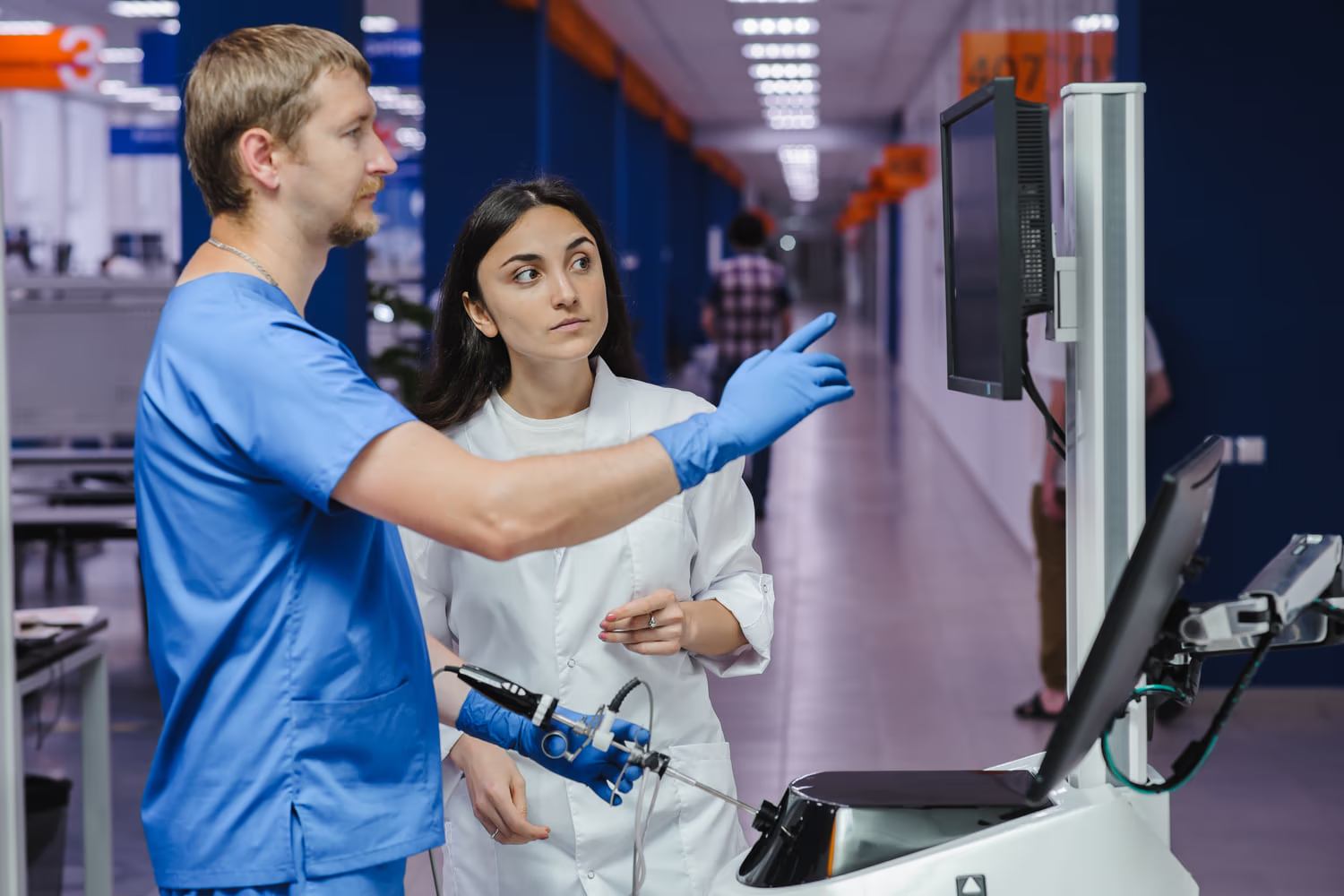
Can you conduct an evaluation of interprofessional simulation?
Interprofessional simulation involves multiple different healthcare disciplines training together simultaneously in one room. The evaluation of such a complex simulation requires specialized tools that measure teamwork and communication rather than just individual skills. This collaborative simulation approach mirrors actual hospital dynamics perfectly, demanding strict evaluation protocols.
When conducting an evaluation of interprofessional teams, observers focus heavily on leadership during the simulation. A successful healthcare simulation will expose communication breakdowns before they harm actual patients in the ward. Therefore, the evaluation rubric must account for interdisciplinary friction during the active simulation scenario.
How does data analytics transform simulation evaluation?
Modern simulation heavily utilizes advanced data analytics to automate the evaluation process for healthcare providers. Sophisticated simulation manikins now capture exact compression depths, ventilation volumes, and medication dosages automatically during the simulation. This massive stream of digital data makes the subsequent evaluation entirely objective and scientifically accurate.
Relying on digital evaluation removes the inherent subjective bias of human instructors in healthcare simulation. When the simulation software highlights a specific clinical error, the learner cannot argue with the mathematical evaluation. This precision is actively transforming how healthcare universities grade their medical students in every simulation.
Additionally, long-term evaluation of this simulation data reveals macro-trends in the university curriculum. If multiple cohorts fail the same simulation scenario, the evaluation points directly to a systemic flaw. Correcting these issues through continuous simulation adjustment is vital for modern healthcare education.
What are the biggest challenges in simulation evaluation today?
Despite its immense importance, conducting a flawless evaluation of a simulation remains challenging due to time constraints. Faculty members in healthcare are often overworked and lack the dedicated time required for thorough simulation assessment. Rushed evaluation processes directly undermine the educational validity of the simulation program.
Another significant hurdle is the total lack of standardized evaluation tools across different simulation centers. While some healthcare facilities use highly rigid evaluation matrices, others rely on informal feedback after a simulation. This inconsistency makes it incredibly difficult to compare simulation outcomes on a national or global scale.
To effectively overcome these barriers, healthcare administrators must allocate dedicated funding specifically for simulation evaluation. Investing in automated evaluation software can drastically reduce the administrative burden on the simulation faculty. Proper funding ensures that the simulation remains a high-priority asset for the healthcare network.

How often should a simulation program undergo formal evaluation?
A complete, holistic evaluation of the entire simulation program should formally occur at least annually. However, individual simulation scenarios require immediate evaluation after every single use to ensure clinical accuracy. Continuous healthcare evolution demands that simulation parameters are updated constantly based on new medical guidelines.
Internal evaluation is strictly necessary, but external evaluation by accreditation bodies provides the ultimate validation. When an independent agency conducts an evaluation of your simulation center, it instantly boosts its academic prestige. This external simulation audit proves your commitment to unparalleled healthcare excellence.
Integrating a culture of continuous evaluation protects the massive financial investment required to build a simulation laboratory. Administrators who ignore routine simulation evaluation risk utilizing outdated practices that harm students. Regular evaluation is the only way to guarantee that a simulation remains relevant in modern healthcare.
FAQ
What is the primary goal of simulation evaluation?
The main objective of any evaluation is to measure the effectiveness of the simulation in meeting educational goals. It ensures that healthcare professionals consistently acquire the necessary clinical skills to maintain patient safety in real environments.
Who conducts the evaluation of a simulation?
Usually, trained faculty members, peer observers, or automated digital systems conduct the evaluation of the simulation. In advanced healthcare settings, external accreditation agencies also perform comprehensive audits of the entire simulation program.
Why do simulation programs fail their evaluation?
Programs typically fail an evaluation due to outdated simulation equipment, poorly trained facilitators, or a lack of clear objectives. Consistent internal evaluation prevents these catastrophic failures in modern healthcare education and simulation training.
Immerse yourself in a demo to see how MedVision transforms traditional learning into an engaging, interactive experience

Subscribe for the Latest News!